
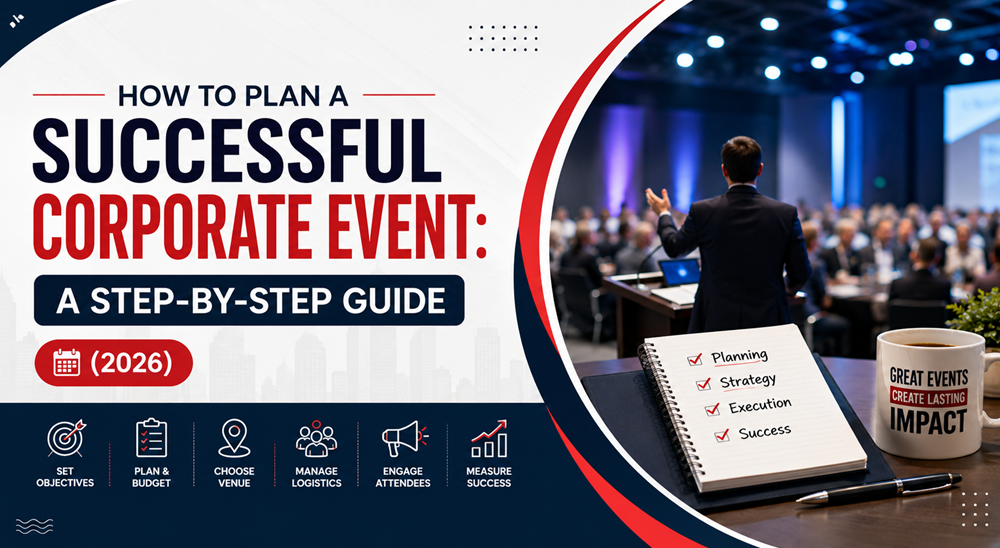
A well-planned corporate event is more than just a gathering—it is an opportunity to strengthen relationships, boost employee engagement, showcase your brand, and achieve business objectives. Whether you're organizing an annual conference, product launch, award ceremony, team-building retreat, or client appreciation event, careful planning is essential for success.
A well-planned corporate event is more than just a gathering—it is an opportunity to strengthen relationships, boost employee engagement, showcase your brand, and achieve business objectives. Whether you're organizing an annual conference, product launch, award ceremony, team-building retreat, or client appreciation event, careful planning is essential for success.
In this comprehensive guide, we'll walk you through the complete corporate event planning process to help you deliver a memorable and impactful event.
1. Define Your Event Objectives
Every successful event starts with a clear purpose.
Ask yourself:
- What is the goal of the event?
- Who is the target audience?
- What outcome do you expect?
Common objectives include:
- Employee engagement
- Product launches
- Client networking
- Sales meetings
- Annual conferences
- Team-building activities
- Recognition and award ceremonies
Having defined goals will guide every decision throughout the planning process.
2. Set a Realistic Budget
Your budget determines almost every aspect of the event.
Consider expenses such as:
- Venue rental
- Catering
- Audio-visual equipment
- Entertainment
- Branding and décor
- Travel and accommodation
- Event technology
- Photography and videography
- Transportation
- Event staff
Always allocate an additional 10–15% contingency budget for unexpected expenses.
3. Choose the Right Venue
The venue plays a crucial role in your guests' overall experience.
Consider factors like:
- Location accessibility
- Capacity
- Parking availability
- Accommodation options
- Technical facilities
- Wi-Fi connectivity
- Accessibility for differently-abled guests
Book your venue well in advance to secure your preferred dates.
4. Create a Detailed Event Timeline
Break your planning into manageable milestones.
Example timeline:
3–6 Months Before
- Finalize objectives
- Approve budget
- Book venue
- Confirm vendors
1–2 Months Before
- Send invitations
- Confirm speakers
- Finalize agenda
- Arrange logistics
1 Week Before
- Confirm attendee list
- Test AV equipment
- Conduct venue walkthrough
- Prepare welcome kits
- Event Day
- Registration
- Guest assistance
- Session management
- Vendor coordination
- Troubleshooting
5. Build the Perfect Agenda
Keep attendees engaged throughout the event.
Include:
Registration
- Opening session
- Keynote presentations
- Networking breaks
- Interactive workshops
- Lunch
- Entertainment
- Closing remarks
- Balance informative sessions with networking opportunities.
6. Manage Vendors Efficiently
Professional vendors help ensure smooth execution.
Coordinate with:
- Caterers
- Decorators
- AV teams
- Photographers
- Event hosts
- Entertainment providers
- Transportation services
Maintain clear communication and written agreements with every vendor.
7. Focus on Branding
Your event should reflect your company's identity.
Branding opportunities include:
- Welcome banners
- Stage backdrops
- Digital screens
- Registration desks
- Name badges
- Gift hampers
- Presentation templates
- Social media displays
Consistent branding creates a professional impression.
8. Simplify Guest Registration
Use digital registration platforms to streamline attendee management.
Include:
- Online registration
- QR code check-in
- Digital badges
- Email confirmations
- Reminder notifications
A smooth registration process sets the tone for the event.
9. Plan Logistics Carefully
Behind every successful event is flawless logistics.
Coordinate:
- Guest transportation
- Airport transfers
- Hotel bookings
- Parking management
- Signage
- Security
- Emergency support
Create backup plans for unforeseen situations.
10. Use Technology to Enhance the Experience
Modern corporate events rely heavily on technology.
Useful tools include:
- Event management software
- Live polling
- Event apps
- Digital feedback forms
- Live streaming
- Interactive presentations
- AI-powered networking platforms
- Technology increases engagement and improves event efficiency.
11. Keep Attendees Engaged
An engaging event leaves a lasting impression.
Ideas include:
- Icebreaker activities
- Networking sessions
- Live Q&A
- Panel discussions
- Gamification
- Team-building challenges
- Interactive workshops
Encourage participation throughout the event.
12. Measure Event Success
After the event, evaluate performance using key metrics.
Track:
- Attendance rate
- Participant feedback
- Engagement levels
- Lead generation
- ROI
- Social media reach
- Sponsor satisfaction
- Use these insights to improve future events.
- Common Corporate Event Planning Mistakes
- Avoid these frequent mistakes:
- Starting planning too late
- Ignoring contingency plans
- Poor communication with vendors
- Overspending the budget
- Lack of attendee engagement
- Choosing an unsuitable venue
- Underestimating logistics
- Not collecting post-event feedback
Planning ahead minimizes risks and ensures a successful outcome.
Why Work with a Professional Corporate Event Management Company?
Managing a corporate event involves countless moving parts. Partnering with an experienced event management company allows you to focus on your business while experts handle every detail.
Professional event planners offer:
- End-to-end event management
- Venue sourcing
- Vendor coordination
- Budget optimization
- Corporate travel management
- Branding and production
- On-site event execution
- Risk management
The result is a seamless, stress-free event that delivers measurable business value.
Final Thoughts
A successful corporate event doesn't happen by chance—it requires strategic planning, attention to detail, and flawless execution. From defining clear objectives to selecting the perfect venue, managing vendors, and measuring results, every step contributes to an exceptional experience for your attendees.
Whether you're planning a conference, corporate retreat, product launch, incentive trip, or annual meeting, following a structured approach will help ensure your event achieves its goals.
If you're looking for expert support, Monkey MICE Tour Solutions Pvt. Ltd. provides comprehensive MICE and corporate event management services, delivering customized experiences that help businesses connect, engage, and grow.
Frequently Asked Questions (FAQs)
What is a corporate event?
A corporate event is a business-focused gathering organized for employees, clients, partners, or stakeholders. Examples include conferences, seminars, product launches, award ceremonies, and team-building retreats.
How far in advance should I plan a corporate event?
For medium to large corporate events, planning should begin at least 3–6 months in advance to secure venues, vendors, and preferred dates.
What is MICE in event management?
MICE stands for Meetings, Incentives, Conferences, and Exhibitions. It refers to specialized business travel and event services designed for organizations and corporate groups.
What is the most important factor in a successful corporate event?
Clear objectives, effective budgeting, detailed planning, strong vendor coordination, and engaging attendee experiences are the key elements of a successful corporate event.
Why should I hire a professional event management company?
Professional event management companies handle planning, logistics, vendor coordination, branding, and execution, helping businesses save time, reduce stress, and deliver high-quality events.